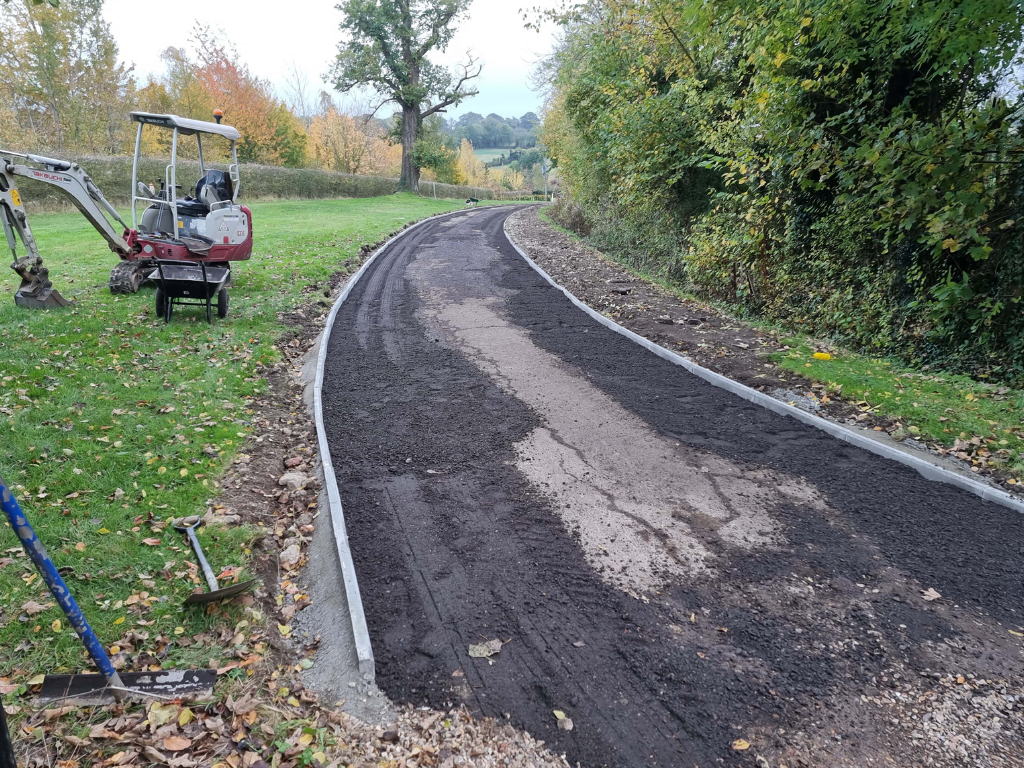
Is Block Paving Suitable for Garden Paths?
A well-designed garden path does much more than provide a route from one part of an outdoor space to another. It can define planting areas, improve access, connect entrances with patios or other features and give the garden a more organised appearance. Choosing the right surface is therefore an important part of creating a path that works well and complements its surroundings.
Block paving is a particularly versatile option for garden paths because it combines a durable walking surface with considerable flexibility in terms of layout, colour and pattern. For homeowners in Felixstowe, Suffolk, professionally installed block paving can create paths that are both practical and visually attractive.
At Felixstowe Driveway Services, careful preparation and installation are central to ensuring that block paving performs effectively rather than simply looking good when first laid.
Why Does Block Paving Work Well for Garden Paths?
Block paving consists of individual paving units installed together to create a continuous surface. While it is widely associated with driveways, the same characteristics can make it highly effective for paths.
A block paved garden path can provide:
- A firm and defined walking surface
- A neat separation between different garden areas
- Considerable design flexibility
- Attractive edging possibilities
- Easy integration with other hard landscaping
- A surface that can follow straight or curved routes
- Individual blocks that can potentially be lifted when local access or repair is required
The result can be much more than a simple walkway. The path can become an intentional part of the overall garden design.
Good Ground Preparation Is Essential
The long-term quality of block paving depends heavily on what lies underneath it.
Simply placing paving blocks onto inadequately prepared ground can eventually result in movement, settlement and uneven sections. The supporting layers need to be suitable for the intended use and prepared correctly before the blocks are installed.
Professional preparation generally considers factors such as:
- Existing ground conditions
- Excavation requirements
- Supporting layers
- Compaction
- Finished levels
- Drainage
- Edge restraint
Getting these elements right provides a stable foundation for the finished path.
A Stable Path Is More Comfortable to Use
An uneven garden path can quickly become frustrating.
Individual blocks that move or settle can create an inconsistent walking surface. Water may also begin collecting in depressions where the original levels have changed.
Correct preparation helps the paving remain stable and consistent. Although garden paths do not usually experience the same vehicle loading as driveways, they still require an appropriately constructed foundation.
Reducing the load does not remove the need for proper groundwork.
Block Paving Can Follow Different Garden Layouts
One of the strongest advantages of block paving is its design flexibility.
Not every garden benefits from a perfectly straight path. Depending on the layout, a pathway may need to curve around planting, connect several areas or widen at particular points.
Individual paving blocks allow considerable freedom when planning the route.
A path might:
- Run directly from an entrance to the rear garden
- Connect a property with a patio
- Curve through planting areas
- Lead towards a seating space
- Provide access to frequently used parts of the garden
- Form part of a larger landscaped layout
The path can therefore be designed around the garden rather than forcing the garden to accommodate the path.
Different Laying Patterns Can Change the Appearance
Block paving also offers flexibility in how individual units are arranged.
The selected laying pattern can influence whether the path appears traditional, contemporary, simple or more decorative.
The most appropriate design depends on the paving selected, path dimensions and surrounding property. A restrained pattern can provide a clean background to planting, while a more detailed layout can make the pathway a stronger visual feature.
Good design considers the garden as a whole rather than selecting paving in isolation.
Colour Can Help Connect Different Outdoor Features
Garden paths frequently sit between several contrasting surfaces.
There may be lawns on one side, planted borders on another and a patio or driveway at one end. Selecting an appropriate block paving colour can help create visual continuity between these different elements.
Rather than treating the path as a separate feature, the paving can be chosen to complement the wider outdoor space.
This can make the finished garden feel more coordinated.
Edging Makes an Important Difference
The edges of a block paved path deserve careful consideration.
Suitable edge restraints help support the paving while also defining where the path finishes and the surrounding garden begins.
A well-defined edge can create a neat transition between paving and:
- Lawns
- Flower beds
- Gravel
- Planting areas
- Other paved surfaces
Edges can also be used creatively to introduce contrast or highlight the shape of the pathway.
Drainage Should Be Planned from the Beginning
Rainwater needs somewhere appropriate to go.
Poorly planned path levels can encourage water to collect in low points or move towards areas where it is not wanted. Drainage should therefore be considered during the preparation and design stages.
Factors such as the surrounding ground, path gradient, finished levels and paving arrangement can all influence water movement.
A professionally constructed path considers how the surface will perform during wet weather as well as how it looks when dry.
Block Paving Can Create Clear Routes Through the Garden
One practical benefit of a dedicated path is that it establishes a predictable route through the outdoor space.
Instead of repeatedly walking over lawns or planted areas, homeowners and visitors have a clear surface to follow.
This can be particularly useful where regular access is needed between different parts of the property.
A well-positioned path can make the entire garden feel easier to navigate and more purposeful.
It Can Improve Access During Wetter Conditions
Grass and exposed soil can become soft or muddy following rainfall.
A properly constructed block paved path provides a defined hard surface that remains separate from surrounding lawns and planting.
This can make routine access through the garden more convenient throughout changing conditions and reduce the need to walk directly across softer areas.
For frequently used routes, this practical advantage can make a considerable difference to everyday use.
Individual Blocks Offer Useful Repair Flexibility
One characteristic that distinguishes block paving from many continuous surfaces is that it consists of individual units.
If a localised section requires attention, suitable blocks can often be lifted to investigate or correct the area before being reinstated.
This does not mean that movement should be expected from properly installed paving. Rather, the modular construction provides useful flexibility should local work become necessary in the future.
Can Block Paving Be Used for Narrow Paths?
Yes. Block paving can be adapted to many path widths, provided the design and installation are appropriate.
For narrower garden routes, careful consideration of the block dimensions and laying pattern becomes particularly important. A pattern that works well across a large driveway may not necessarily produce the best visual result on a narrow pathway.
Professional planning helps ensure that the proportions suit the available space.
Can It Work for Curved Paths?
Block paving can also be highly effective for curved pathways.
Individual units can be arranged to follow changes in direction, while appropriately designed edges help maintain a defined shape.
Curves can be particularly useful where a softer appearance is preferred or where the path needs to navigate around existing garden features.
The key is to plan the route before installation so that changes in direction appear intentional rather than improvised.
What Causes Block Paved Paths to Become Uneven?
When block paving develops movement or settlement, the problem is often connected to the supporting construction rather than the blocks themselves.
Potential causes can include:
- Inadequate ground preparation
- Insufficient compaction
- Weak supporting layers
- Poor edge restraint
- Water affecting the foundation
- Local ground movement
This is why professional installation adds significant value. Attention to the parts that disappear beneath the finished paving is just as important as achieving a neat surface.
Is Block Paving Easy to Keep Looking Presentable?
Like any external surface, block paving benefits from appropriate maintenance.
Leaves, soil and general garden debris should be removed periodically rather than being allowed to accumulate. Particular attention may also be required where vegetation or organic material gathers around edges and joints.
Regular straightforward maintenance helps preserve the clean definition of the pathway and prevents surrounding garden growth from gradually obscuring it.
The Path Should Be Designed Around How the Garden Is Used
Before installing a garden path, it is useful to think about how people naturally move through the space.
The shortest route is not always automatically the best one.
Consider:
- Which entrances are used most frequently
- Where people need regular access
- Whether bins or garden equipment use the route
- How the path connects with patios or other surfaces
- Whether particular areas become muddy
- Which parts of the garden should remain uninterrupted
Designing around real everyday use can create a path that feels natural rather than simply decorative.
Why Professional Installation Matters
The finished blocks are the most visible part of the project, but much of the quality comes from work that can no longer be seen once installation is complete.
Professional block paving involves careful attention to preparation, levels, compaction, drainage, edges and laying consistency.
When these elements work together, the result is a path that looks considered and provides a dependable surface for everyday use.
Focusing only on the appearance of the blocks while overlooking the foundation can compromise the finished result.
Block Paved Garden Paths in Felixstowe, Suffolk
At Felixstowe Driveway Services, we provide professional driveway and surfacing services throughout Felixstowe, Suffolk, including block paving suitable for paths and other outdoor areas.
Every garden layout is different, so the right approach depends on the available space, ground conditions, intended route and surrounding features.
By considering the foundation, drainage, paving layout and finishing details together, a block paved path can become a practical and attractive addition to the outdoor space rather than simply a route across it.
Conclusion
Block paving can be an excellent choice for garden paths. It provides a defined and durable walking surface while offering considerable flexibility in terms of shape, pattern, colour and edging. It can work for straight routes, curved pathways, narrow spaces and paths connecting different parts of a garden.
However, the quality of the finished path depends on more than the blocks themselves. Proper ground preparation, stable supporting layers, suitable levels, effective drainage and secure edges are all essential for long-term performance.
If you are considering a new block paved garden path at your property in Felixstowe, Suffolk, contact Felixstowe Driveway Services. We can assess the area and provide a professionally planned and installed surface that complements your garden while creating a practical route for everyday use.
Call us on: 01394 338 693
Click here to find out more about Felixstowe Driveway Services
Click here to complete our contact form and see how we can help with your driveway needs.